
A San Francisco couple’s attempt to snag a seemingly cheap rental property at a city auction for $25,000 has become a cautionary tale, as they discovered they had actually purchased an 83-foot-long, 7-foot-wide strip of roadway known as Dirt Alley. Real estate YouTuber Scott Edward highlighted the incident, emphasizing how easily confusion can arise in a market like San Francisco, where median home prices hover around $1.5 million, making any seemingly “affordable” auction listing appear as a golden opportunity.
The couple, according to Edward, received a notification about a property at “1926” that was delinquent on taxes. They mistakenly believed this referred to their neighbor’s adjacent property, a crucial misunderstanding that led to their significant financial misstep. The situation underscores the critical distinction between an address, a parcel number, and usable property, a theme Edward repeatedly stresses. While the transaction was legally sound and ownership officially transferred, the purchased parcel proved to be practically useless for their intended purpose.
This incident echoes a similar case Edward covered previously, where an individual in Ohio accidentally purchased a street at auction for $5,000. He notes that such stories often spark debate in comment sections about how these errors can occur. However, when the situation unfolds in an extremely high-stakes market like San Francisco, the consequences and the potential for misunderstanding become far more pronounced.
The Shocking Discovery of Their Purchase
The moment of realization was undoubtedly devastating. Instead of acquiring a duplex or a unit suitable for rental income, the couple found themselves the legal owners of a narrow strip of land. This strip, Dirt Alley, runs alongside the building they had initially targeted.
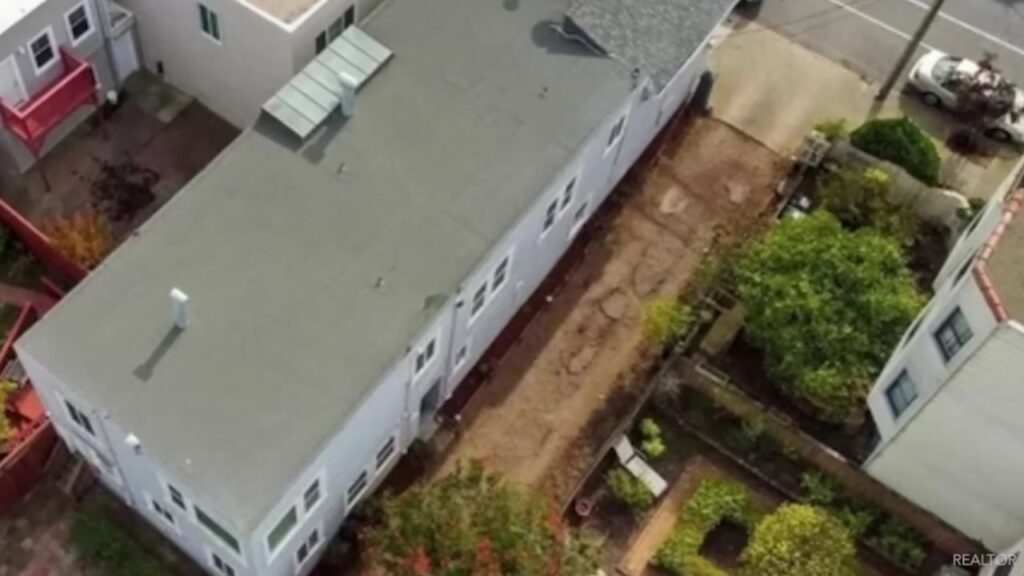
Edward uses this scenario to illustrate how easily the concepts of “address,” “parcel,” and “usable property” can become conflated. He emphasizes that a legal and properly recorded transaction doesn’t automatically equate to a purchase that meets a buyer’s expectations or intended use. The couple’s experience serves as a stark reminder that even in a city where property values are astronomical, a seemingly attractive auction price can mask critical underlying issues.
The specific location identified is 1926 Kirkham Street in San Francisco’s Sunset District, a neighborhood characterized by its residential row houses. In such a setting, an auction listing would intuitively suggest a residential property, not a leftover sliver of land. The couple’s quick online search, a common practice for many prospective buyers, likely contributed to their misjudgment. Standard online tools, including Google Maps, would typically pinpoint an address to a building, and listing sites might even display property photos, creating a sense of validation that snowballed into misplaced confidence.
How Auction Systems Can Lead to Misinterpretation
Edward delves into the mechanics of how such oversights can occur within the auction system. The sale originated from the San Francisco Treasurer and Tax Collector’s Office, which auctions not only properties with unpaid taxes but also “odd parcels” that the city no longer wishes to manage. These often include “leftover slivers” that resulted from historical subdivision maps.
This aspect of urban land ownership is frequently overlooked. Cities can find themselves holding interests in peculiar strips of land that generate minimal revenue, lack a clear public purpose, and possess complicated ownership histories. Consequently, these parcels can end up on auction lists.
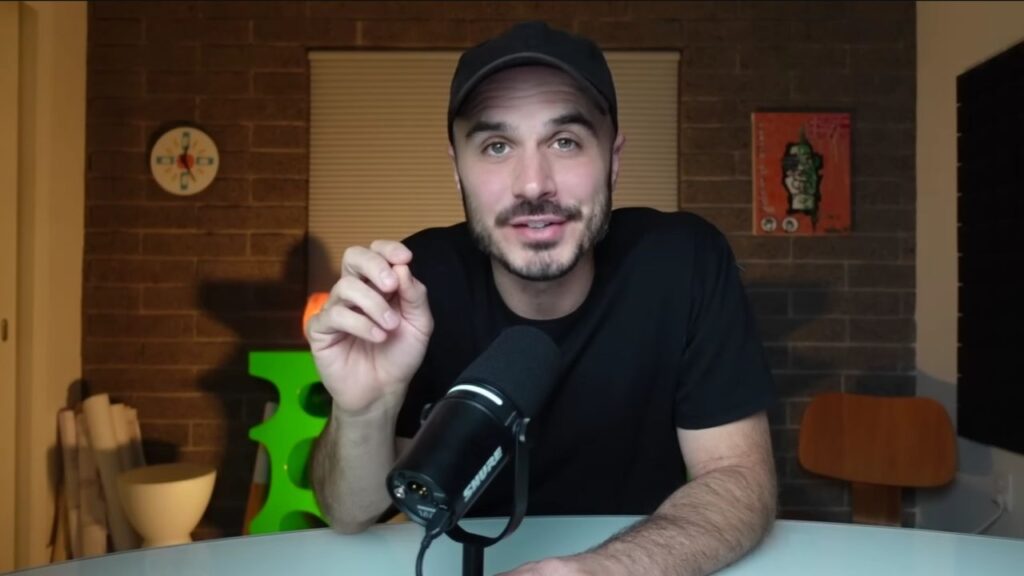
Edward points out that the couple, identified as JJ and her husband, likely did not conduct extensive due diligence beyond superficial checks. He stresses that property auctions require a different approach. Buyers may forgo traditional safeguards like property inspections, yet they are still committing significant financial resources.
A key statistic from that particular auction day highlights the prevalence of these unusual parcels. Out of 47 listed parcels, only about half were sold, and many fetched extremely low prices, some as low as $1. Other parcels sold for between $10 and $11,000. The couple’s winning bid of $25,000, while seemingly high in comparison to these minimal sales, still fell within a range that might not have immediately triggered alarm bells for a property they believed to be a valuable rental unit.
Edward’s blunt assessment is that in an exceptionally expensive market, a surprisingly low price should prompt a buyer to ask, “What am I missing?” rather than assuming they’ve discovered an unbeatable deal.
The Celebration, the Returned Check, and the City’s Stance
A particularly poignant detail shared by Edward is the immediate aftermath of the auction win. The couple celebrated their perceived good fortune, shared the news with friends, and the husband even playfully approached their neighbor, announcing, “Hey, I’m your landlord now.”
The stark reality check arrived in a manner that Edward describes as almost cinematic. After JJ wrote an additional $8,000 check for a transfer fee, it was returned. This event served as a critical red flag, prompting a deeper investigation that ultimately revealed the true nature of their purchase.
Edward also explains the city’s perspective, which was largely unyielding. He presents a parcel map that the city claims was made available to qualified bidders. This map, he notes, specifically highlighted Lot 24A – the narrow sliver – rather than Lot 24, the larger neighboring parcel. This minute distinction, often overlooked in the rush of an auction, proved to be the critical differentiator.
The city’s official stance, as interpreted by Edward, conveyed regret over any confusion but asserted no responsibility for bidders who failed to thoroughly review the public documentation. He suggests that reversing the sale would be an arduous process, as auction results are rarely rescinded and typically require significant political or administrative intervention. This story serves as a nightmarish illustration for anyone who has ever felt overwhelmed by property paperwork, demonstrating how a hasty assumption can collide with a system governed by maps, parcel numbers, and disclaimers, often overshadowing common sense.
The Practicalities of Owning a Slice of Alleyway
Edward doesn’t simply leave the couple with the grim reality of their situation. He explores the more intriguing question of what ownership truly entails in this context. He details the practical function of Dirt Alley for the surrounding properties.
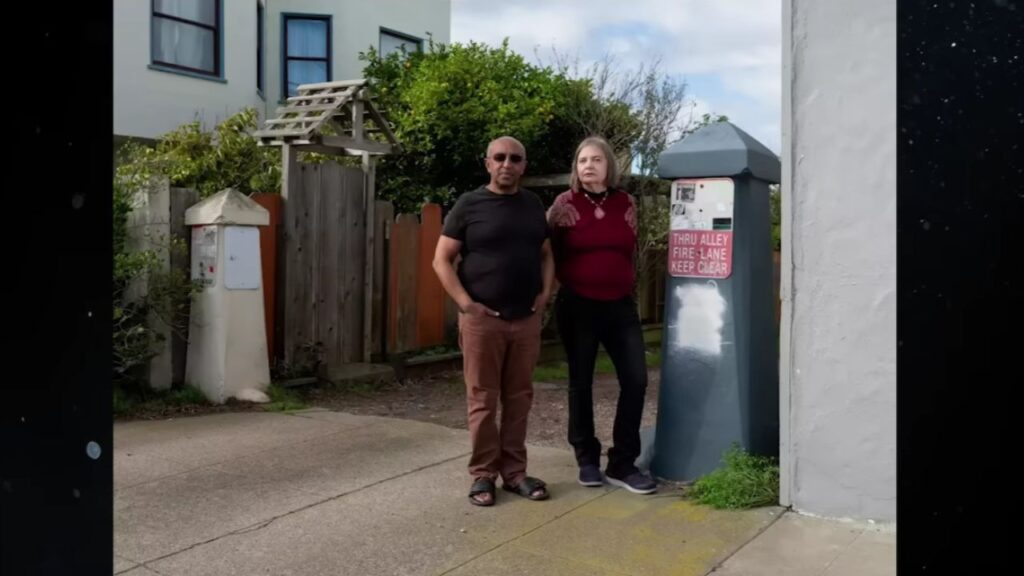
The alley serves as a crucial access point for residents, providing passage to backyard parking and rear entrances of nearby homes. This means the strip is far from being a derelict piece of land; it’s an active thoroughfare integral to the block’s functionality, despite its unassuming appearance.
The “fantasy fixes” that might come to mind, such as building on the alley, immediately run into community opposition. If the alley’s access is obstructed, neighbors would face the inconvenience of rerouting their access. This scenario is a predictable recipe for neighborhood conflict, even without specialized zoning knowledge.
Another idea, suggested by commenters in similar situations, is to implement a private toll. However, Edward frames this as a logistical quagmire involving ongoing maintenance, enforcement, and perpetual conflict, especially given the alley’s embedded role in residents’ daily lives and movements. Even a more benevolent intention, like transforming the alley into a community garden or public space, faces the same hurdle: improving the alley for one vision could restrict access for those who rely on it, quickly turning good intentions into contentious neighborhood politics.
The “Skinny House” Dream and the Reality Check
Edward introduces a surprising element by not dismissing the idea of building a “tiny house” on the alley outright. He acknowledges historical precedents of extremely narrow houses constructed on alley-like parcels. However, he cautions that these were built in a different era, with vastly different zoning laws and enforcement practices.
He references the famous Spite House in Alexandria, Virginia, which is approximately 7 feet wide – similar to the width of Dirt Alley. This house was constructed in the 1800s under circumstances that would likely be met with derision by modern permitting offices.
Edward also mentions other examples of narrow houses, including another alley house in Virginia and a notably tiny structure in Warsaw, Poland. His overarching point is that while such constructions have occurred historically, they do not guarantee feasibility today, particularly in a place like San Francisco, where regulations, access requirements, and potential neighbor objections can be formidable barriers.
This aspect of the story adds a distinctly modern sting: the couple didn’t just acquire something unusable; they purchased something that, while legally theirs, is practically and socially constrained by its surroundings. Edward concludes that ownership does not automatically equate to access, and access does not guarantee usability, especially in older cities where historical planning decisions continue to impact contemporary realities.
The Genesis of Odd Parcels and Recurring Mix-Ups
Edward attributes the existence of alleys like Dirt Alley in private ownership to the original neighborhood mapping processes. Early development plans often created lots, streets, and easements that were not always precisely defined, leaving narrow strips of land in a legal gray area.
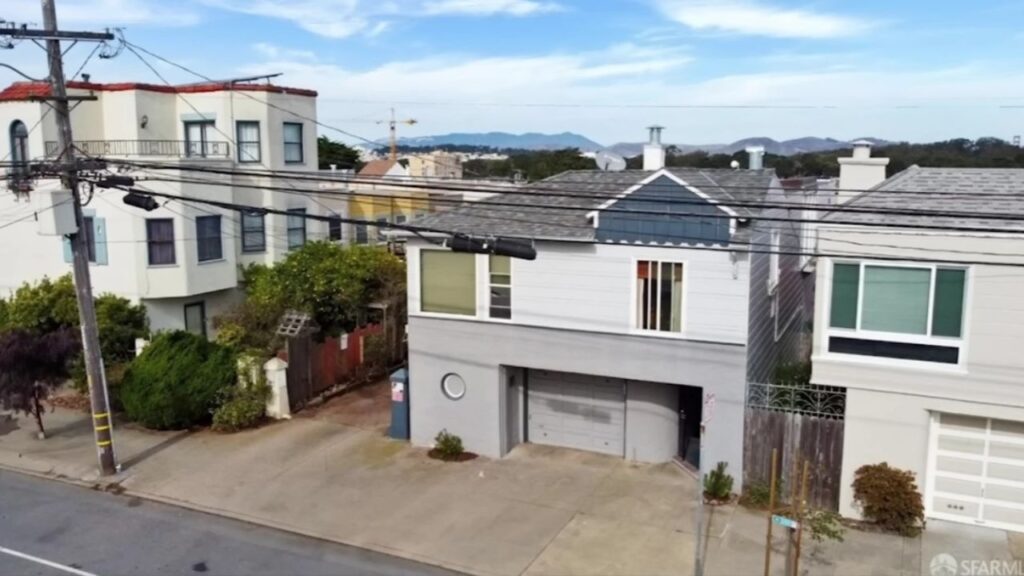
Over time, these strips can become neglected, as they don’t generate significant tax revenue and lack a clear public function. This often means the city has little incentive to actively manage them until they become a bureaucratic issue.
When property taxes go unpaid or ownership records become ambiguous, Edward explains, cities may auction off any interest they hold. They are not obligated to ensure that a buyer can derive profit or practical use from the land, as long as proper disclosures are made.
This explains why the online reaction to the couple’s predicament was not universally sympathetic. Edward notes that the prevailing online sentiment was that the couple were not viewed as victims, as a more thorough examination of the auction documents would have clearly indicated they were bidding on an alley, not a house. Nevertheless, even with the “buyer beware” principle, the story serves as a potent reminder that technically accurate paperwork can still be emotionally misleading, especially when a familiar street address appears to corroborate a mistaken assumption.
The Sole Essential Lesson: Exercise Extreme Caution
Edward concludes by contemplating what he might do if he were in a similar predicament with an alley parcel, suggesting hypothetical uses like a small community park or an artistic installation. However, he frames these as thought experiments rather than definitive solutions.
The more critical takeaway is the inherent warning embedded within the entire narrative. For anyone considering participating in an auction, the true “deal” is not the listed price but the fine print, the parcel map, and the often-overlooked details that seem insignificant until they become paramount.
And for those who might think, “I would never fall for something like that,” Edward’s story poses a sharper, more introspective question: If a letter arrived at your home with a neighbor’s address, and online searches seemed to confirm it, would you truly take the time to meticulously verify the actual parcel details before wiring the funds?
