
Did you know that 91% of small businesses now use CRM software? It’s a key tool for managing customer interactions and driving growth. CRM solutions help small businesses handle sales, marketing, and customer relationships better.
This guide will cover CRM software for small businesses. We’ll look at its main features, benefits, and what to consider when choosing a system. It’s perfect for startups, family businesses, or growing small enterprises. You’ll learn how to use CRM technology to boost your success.
Key Takeaways
- CRM software is essential for 91% of small businesses to improve operations and grow.
- This guide will cover the core functions, benefits, and top features of CRM solutions for small businesses.
- Learn about the differences between cloud-based and on-premise CRM options and how to pick the best one for your business.
- Get tips on implementing and adopting a CRM system, including data migration, user training, and strategies for adoption.
- See how CRM can work with customer service, marketing automation, and other tools to make your business more efficient.
What is CRM Software for Small Businesses?
CRM software helps small businesses manage their customer interactions better. It improves sales and marketing and makes business operations smoother. It acts as a key contact database solution, helping small businesses keep track of their customer relationships.
Definition and Core Functions
CRM software for small businesses brings together different customer management tasks. It handles contact info, communication history, and tracks sales pipelines. The main features of a small business CRM include:
- Contact management: It stores and organizes customer and prospect info, like contact details and communication history.
- Lead tracking and nurturing: It helps identify, manage, and grow potential sales leads with targeted marketing and sales efforts.
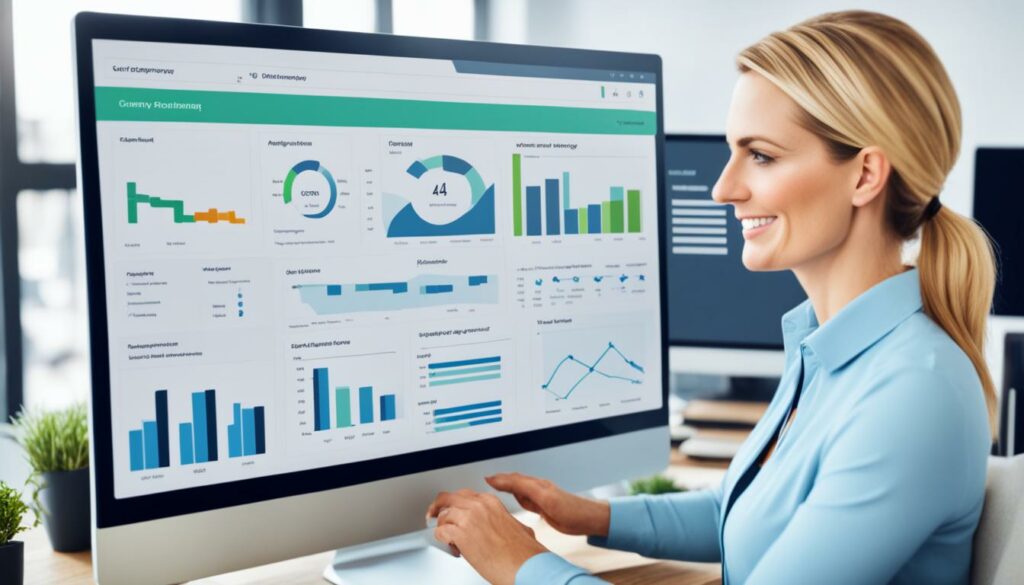
- Sales pipeline visualization: It gives a clear view of the sales process, helping small businesses understand their sales performance better.
Benefits for Small Business Growth
Using a strong CRM system brings many benefits for small businesses. Some key advantages are:
- Increased efficiency: It makes customer interactions smoother and automates sales and marketing tasks, boosting productivity and cutting down on admin work.
- Better customer insights: It helps understand customer preferences and behaviors, allowing for more personalized services.
- Enhanced sales performance: It optimizes the sales pipeline, leading to better lead management, higher conversion rates, and more revenue.
- Strengthened customer relationships: It helps build stronger, more meaningful connections with customers through consistent communication and personalized engagement.
CRM software opens up new growth opportunities for small businesses. It helps them stay ahead in the market and build lasting relationships with customers.
Top Features to Look for in a Small Business CRM
Choosing the right CRM software for your small business is key. Focus on features that boost your operations. Look at contact management, lead tracking, and sales pipeline visualization.
Contact Management
A good CRM for small businesses has strong contact management. It should let you store and organize customer info like contact details and history. This helps you build better customer relationships and keeps team interactions smooth.
Lead Tracking and Nurturing
For small businesses, managing leads well is crucial for growth. Find a CRM that tracks and nurtures leads well. It should help capture and prioritize leads, automate follow-ups, and track sales pipeline progress. This can turn more leads into customers.
Sales Pipeline Visualization
Seeing your sales pipeline is key to understanding your sales and finding ways to improve. The best CRM software for small businesses has tools for easy sales pipeline visualization. These tools let you track deals, see sales activity, and spot bottlenecks. This visibility helps you make smart sales decisions.
By focusing on these features, you can pick a CRM solution that meets your business’s needs. It will help your team improve customer relationships, streamline sales, and grow sustainably.
Cloud-Based vs. On-Premise CRM Solutions
Choosing between cloud-based and on-premise CRM solutions is crucial for small businesses. Cloud-based CRM platforms are run by the provider, making them easy to use, scalable, and needing less IT setup. On the other hand, on-premise CRM systems are used and managed by the business. They offer more control but require a big initial investment and IT help.
Deciding between these two CRM types depends on your business size, IT setup, security needs, and growth plans. Let’s look at the main differences to help you choose wisely:
| Feature | Cloud-Based CRM | On-Premise CRM |
|---|---|---|
| Accessibility | Accessible from anywhere with an internet connection | Accessible only from the local network or devices with the software installed |
| Scalability | Easily scalable to accommodate business growth | Requires additional hardware and software investments to scale |
| IT Infrastructure | Minimal IT infrastructure required, as the provider manages the hosting and maintenance | Requires dedicated IT resources for installation, maintenance, and upgrades |
| Customization | Limited customization options, as the platform is standardized | Offers more flexibility for customization and integration with other systems |
| Security | Relies on the provider’s security measures, which may be more robust than in-house solutions | Allows for more control over data security and compliance, but requires additional security measures |
| Upfront Cost | Lower upfront cost, with a subscription-based pricing model | Higher upfront cost, but potentially lower long-term costs |
The choice between a cloud-based CRM and an on-premise CRM solution depends on your business’s needs, resources, and goals. By looking at these factors, you can pick the best CRM for your small business. This ensures you get the most out of your CRM.
CRM Software for Small Businesses
Small businesses now have many affordable CRM options. These platforms offer powerful features, just like big companies use. They meet the special needs of small businesses.
Affordable and Scalable Options
CRM software for small businesses is easy on the wallet. Many offer different pricing plans. This lets small companies pick a solution that fits their budget and grow with their needs.
These CRM solutions also grow with your business. They can handle more users, data, and features as you expand. This helps small businesses stay competitive and run smoothly as they get bigger.
Integration with Other Business Tools
CRM software for small businesses also works well with other important tools. It connects easily with accounting software, marketing tools, and customer service platforms. This creates a system that makes things more efficient and helps businesses work better together.
By linking their CRM with other tools, small businesses gain many benefits. They get better data sharing, improved lead tracking, and smoother customer service. This integration helps them work better, cut down on manual work, and make smarter choices with their customer data.
“CRM software has been a game-changer for our small business, allowing us to better manage our customer relationships and streamline our operations across multiple departments.”
– Jane Doe, Founder of ABC Enterprises
Choosing the Right CRM for Your Small Business
Finding the right CRM software is key to making your small business run smoothly and grow. It’s important to look at what your business needs and how easy the CRM is to use. This helps you make a smart choice.
Assessing Your Business Needs
Start by looking at what challenges your business faces, what you want to achieve, and what features you need. Think about managing customer data, tracking leads, visualizing sales pipelines, and how it works with other tools. Knowing what you need helps you find the CRM software for small businesses that fits you best.
Evaluating User-Friendliness
It’s also crucial to check how easy the CRM is to use. The ease of use affects how well your team will use it. Look for a CRM with a simple interface, easy workflows, and clear features. This makes it easier for your team to start using it and work more efficiently.
Choosing a CRM that matches your business needs and is user-friendly ensures a successful setup. It also helps you get the most out of your CRM investment.
Implementing and Adopting a CRM System
Getting a CRM software for small businesses right needs a lot of planning and doing things well. You must move your customer data over smoothly and connect it with your other business tools. It’s also key to train your team well so they use the CRM system fully.
Data Migration and Integration
Moving your customer data to a new CRM software for small businesses can feel tough, but it’s vital. Make sure the data migration and integration go smoothly by:
- Doing a detailed check of your current customer data
- Cleaning and preparing the data for the CRM
- Creating clear steps for keeping your CRM and other business systems in sync
User Training and Adoption Strategies
Getting your team to use the new CRM system well is crucial for its success. Create a detailed training plan that includes:
- Deep dives into the CRM’s features and how they work
- Hands-on practice to help users feel at ease with it
- Help and support to solve any problems or questions
By focusing on these important steps, you can make the switch to your CRM software for small businesses smooth and get the most out of it.

Customer Service and Support Integrations
Linking your CRM software for small businesses with customer service tools boosts the customer experience. It also makes support operations smoother. By connecting with help desks, chatbots, and call centers, you get a single place for managing customer questions and support tickets. This ensures quick and tailored responses.
This integration brings big benefits for small businesses:
- Customers are happier with quicker issue fixes and more tailored support
- Customers stay loyal because of a smooth support experience
- Operations run better with automated tasks and quicker replies
- There’s better insight into customer data and history for smarter decisions
When customer service integrations work well with your CRM software for small businesses, you unlock a powerful combo. This combo boosts business growth and builds stronger customer ties.
“Integrating our CRM with our customer service platform has been a game-changer for our small business. We’ve seen a significant improvement in customer satisfaction and a reduction in support response times.”
Using these integrations, small businesses can offer a more personal and efficient service. This leads to more loyal customers and success over time.
| Feature | Benefit |
|---|---|
| Centralized customer data | Provides a 360-degree view of customer interactions and history |
| Automated ticket management | Streamlines the support process and ensures timely responses |
| Omnichannel support | Enables customers to reach out through their preferred channels |
| Real-time reporting and analytics | Offers valuable insights to improve the customer service experience |
By linking your CRM software for small businesses with strong customer service tools, you can take your business to new heights. You deliver top-notch support and build lasting customer relationships.
Marketing Automation and CRM Integration
Linking your customer relationship management (CRM) system with marketing automation software changes the game for small businesses. It connects your CRM with email marketing and social media tools. This way, you can make lead generation smoother, nurture prospects better, and track your marketing campaign success.
Email Marketing Campaigns
When your CRM works with email marketing software, you can use customer data to send very personal and focused email campaigns. This makes people more likely to open and click on your emails, which can lead to more sales. You can also see how well your email campaigns do, which helps you make them better in the future.
Social Media Integration
Linking your CRM with social media tools lets you talk to your customers where they hang out online. You can keep an eye on social media, answer questions, and find new leads with targeted ads. By matching your social media with CRM data, your marketing becomes stronger and more focused.
Marketing automation and CRM integration are powerful because they use data to make your marketing better. They let you send messages that really speak to your customers and help you make your marketing work harder. By making your marketing and CRM work together, you can get more leads, help them along, and grow your business.
| Feature | Benefit |
|---|---|
| Email Marketing Campaigns | Personalized and targeted email communications for improved engagement and conversion rates. |
| Social Media Integration | Seamless social media monitoring, lead generation, and customer service for a more cohesive marketing strategy. |
| Data-Driven Insights | Leverage customer data to optimize marketing efforts and make informed business decisions. |
“Integrating your CRM with marketing automation tools can amplify the power of your small business’s marketing efforts, enabling you to reach your customers more effectively and drive better results.”
Measuring the Success of Your CRM Implementation
As a small business owner, using a CRM (Customer Relationship Management) software is a big step forward. It’s key to check if it’s working well. By setting key performance indicators (KPIs) and using your CRM’s reporting and analytics, you can see how you’re doing. This helps you make smart choices to improve your customer relationships.
Key Performance Indicators (KPIs)
When checking how well your CRM works, focus on KPIs that match your business goals. Important KPIs include:
- Lead conversion rates: See how well your CRM turns leads into customers.
- Customer retention: Keep an eye on how many customers stay with your company over time.
- Sales productivity: Check how your CRM affects your sales team’s work.
Reporting and Analytics
Your CRM’s reporting and analytics are key for tracking KPIs and finding ways to get better. They give you deep insights into customer behavior, sales, and your business overall.
By looking at your CRM’s reports and analytics often, you can make choices based on data. This leads to more leads, happier customers, and stronger growth for your business.
Conclusion
CRM software has changed the game for small businesses. It helps entrepreneurs streamline their work, increase sales, and improve customer relationships. This leads to lasting growth. Small businesses now have many options, from cloud-based to on-premise solutions.
Putting a CRM system in place is key. It needs careful planning for data and user training. When combined with customer service and marketing tools, CRM boosts customer experiences and marketing efforts. Regular checks on CRM success help small business owners improve and get the most from their investment.
For small businesses, using CRM software for small businesses is vital for growth and staying ahead. With the right CRM and ongoing improvement, small business owners can find new chances, build stronger customer ties, and drive their businesses forward.
FAQ
What is CRM software for small businesses?
CRM (Customer Relationship Management) software helps small businesses manage customer interactions better. It improves sales and marketing efforts. It also helps with overall business operations.
It includes managing contacts, tracking leads, and visualizing sales pipelines.
What are the benefits of using CRM software for small businesses?
CRM software boosts efficiency and gives better insights into customers. It also improves sales and strengthens customer relationships. It helps small businesses streamline sales and marketing and gain insights for growth.
What are the top features to look for in a small business CRM?
Look for features like robust contact management and lead tracking. Also, look for easy-to-use sales pipeline visualization tools. These help optimize sales and marketing, improve customer interactions, and drive growth.
What are the differences between cloud-based and on-premise CRM solutions?
Cloud-based CRM is hosted by the provider, offering easy access and scalability. It also reduces IT needs. On-premise CRM is installed locally, offering customization but needing more upfront investment and IT support.
The choice depends on your business size, IT resources, security needs, and growth plans.
What are the affordable and scalable CRM options for small businesses?
There are many CRM options for small businesses that are affordable and scalable. They offer powerful CRM features at a lower cost. Many also integrate with other tools like accounting and marketing automation, helping small businesses streamline their work.
How do I choose the right CRM for my small business?
Pick the right CRM by assessing your business needs and preferences. Look at your challenges, growth goals, and the features you need. Also, consider how easy the CRM is for your team to use. This ensures a successful implementation and gets the most out of your CRM.
How do I implement and adopt a CRM system for my small business?
To implement a CRM, plan carefully and smoothly move your data and integrate it with other software. Training your team to use the CRM is also key. This ensures a smooth transition and maximizes the CRM’s benefits.
How can I integrate my CRM system with customer service and marketing automation tools?
Connect your CRM with customer service tools for better customer experience and support. This creates a central place for managing customer questions and support. CRM also works well with marketing automation tools, making marketing more effective by generating leads and tracking campaigns.
How do I measure the success of my CRM implementation?
Check the success of your CRM by setting key performance indicators (KPIs) like lead conversion and customer retention. Use your CRM’s reporting and analytics to track these KPIs. This helps you improve your CRM strategy and make data-driven decisions.
