
Most people think of their driveway as fully theirs to do with as they please. It’s on your property, you paid for it, and it sits right there in front of your house.
Simple, right? Well, not exactly.
Some of the restrictions are obvious. Others are genuinely shocking – and the penalties for ignoring them can range from a polite neighbor complaint all the way to a tow truck showing up or a fine landing in your mailbox.
Here’s a look at 12 items commonly found on driveways across America that are actually banned in many jurisdictions. Be surprised by how many might apply to you.
1. RVs and Motorhomes

This one surprises a lot of people. You own the RV, you own the driveway, so surely it’s fine to park it there?
Not so fast. Unfortunately, there aren’t state-wide laws in place that regulate RV driveway parking, so finding answers to these questions may not be as simple as you think.
The rules differ wildly from one city to the next. In most Georgian cities, it is illegal to park an RV in your driveway, resulting in a fine of up to $1,000 as well as jail time.
That’s not a typo. Jail time.
Meanwhile, in most cities, you are not allowed to park an RV in the driveway if it is longer than 25 feet, and some city laws don’t allow you to park RVs in the driveway for more than 14 consecutive days. RVs and boats are almost always a target of HOA rules.
You might be allowed to have one in your driveway for a short period, like 24 to 48 hours for loading and unloading, but long-term storage is almost always forbidden. Think of it like a houseguest who is welcome for a weekend but not for the entire summer.
2. Boats and Boat Trailers
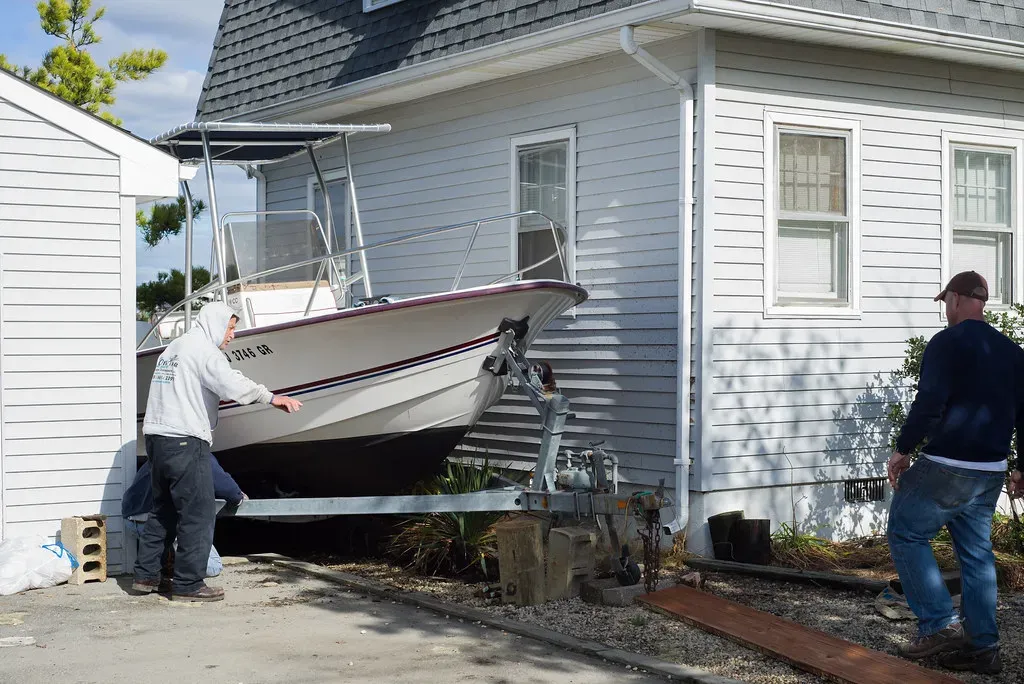
Boat owners love their vessels, and naturally, they want to keep them close to home. The problem is that many municipalities see a boat trailer on a residential driveway as a public eyesore or a safety hazard.
In most parts of Georgia, it is illegal to park boats in driveways, and doing so could lead to a hefty fine. It’s one of the stricter states on this issue.
In some areas of Illinois, boat owners are only permitted to park their boats on a driveway for up to 48 hours and only for unloading purposes. So technically, the moment you’re done unloading, the clock is already ticking.
In a majority of Mississippi, boats can only be parked in a front driveway for up to 72 hours, and for periods exceeding 72 hours, these recreational vehicles must be parked in a rear or side yard. Honestly, the boat trailer situation gets even more layered at the HOA level.
The Florida HOA driveway parking statute only applies to “personal vehicles” and “work vehicles” and would not apply to boats or boat trailers. So even in states with new, more homeowner-friendly laws, boat trailers can still be restricted.
3. Inoperable or “Junk” Vehicles

That old project car sitting on the driveway with a flat tire? It might be your pride and joy, your weekend hobby, a future classic.
To your HOA or local code enforcement, it’s something else entirely. HOA car rules vary by city, state, and association, but many communities don’t allow inoperable cars or “junk cars” to be parked in visible areas of the community, including streets owned by the association, guest parking spaces, and even driveways.
A “project car” to you might be a “junk car” to the HOA. Even if it runs, things like flat tires, broken windows, or expired tags can get it classified as inoperable and lead to a violation notice.
It’s a fine line, and the HOA often gets to draw it. A car that’s up on blocks, has a flat tire, or is clearly not running is a huge red flag for HOAs.
They will want it moved or repaired immediately, and this also applies to cars with expired registration tags. Deteriorating, non-operational vehicles can be eyesores, take up valuable parking spots, and leak dangerous fluids and fumes.
Because it’s an HOA board’s job to attract new homebuyers, preserve safety, and maintain fairness, inoperable vehicles are, in most cases, unlikely to be approved.
4. Commercial Trucks and Work Vans with Logos

Here’s the thing – many homeowners who run small businesses or do trades work drive a company-branded van or truck home every evening. It’s practical, it saves time in the morning, and it feels harmless.
Many HOAs see it differently. Commercial vehicles, like a work truck or a van with a company logo, are flat-out prohibited by many HOAs from being parked in driveways, especially overnight.
They see it as running a business from your home, which is often a no-go. A work van with logos and a ladder rack is something your HOA likely has rules against parking in your driveway, especially overnight.
The reasoning is that it detracts from the residential character of the neighborhood. That said, some states are pushing back on this.
Some states, like Florida, have passed legislation to protect homeowners’ rights to park work vehicles at home, so it’s worth knowing your local laws. Florida’s 2024 HOA law changes were significant here.
The statute now prevents HOA governing documents from stopping a property owner, tenant, guest, or invitee from parking their personal vehicle, including a pickup truck, in the driveway. The documents may also not prohibit parking a work vehicle that is not a commercial motor vehicle, regardless of any official insignia or visible designation.
5. Trash Cans Left Out Too Long

This one catches a lot of people off guard because leaving your bins at the top of the driveway after pickup day seems pretty harmless. Plenty of people do it – drag the cans out the night before, forget to bring them in for a day or two, and suddenly there’s a notice in the mailbox.
HOAs have specific rules about when trash and recycling bins can be at the curb. Put them out too early or leave them out too long after pickup, and you’re likely to get a letter.
They often require bins to be stored out of sight, meaning you can’t just leave them on the side of your house or at the top of your driveway. 006 prohibits garbage cans from being left in public view from a street, highway, or private road for more than 36 hours.
That’s a specific, legally enforceable limit. It’s not just an HOA opinion – it’s written into county code.
Garbage cans are a common point of friction. In Florida, HOAs may not fine residents for leaving garbage receptacles at the curb or driveway end within 24 hours of a scheduled trash collection.
6. Portable Canopy Structures
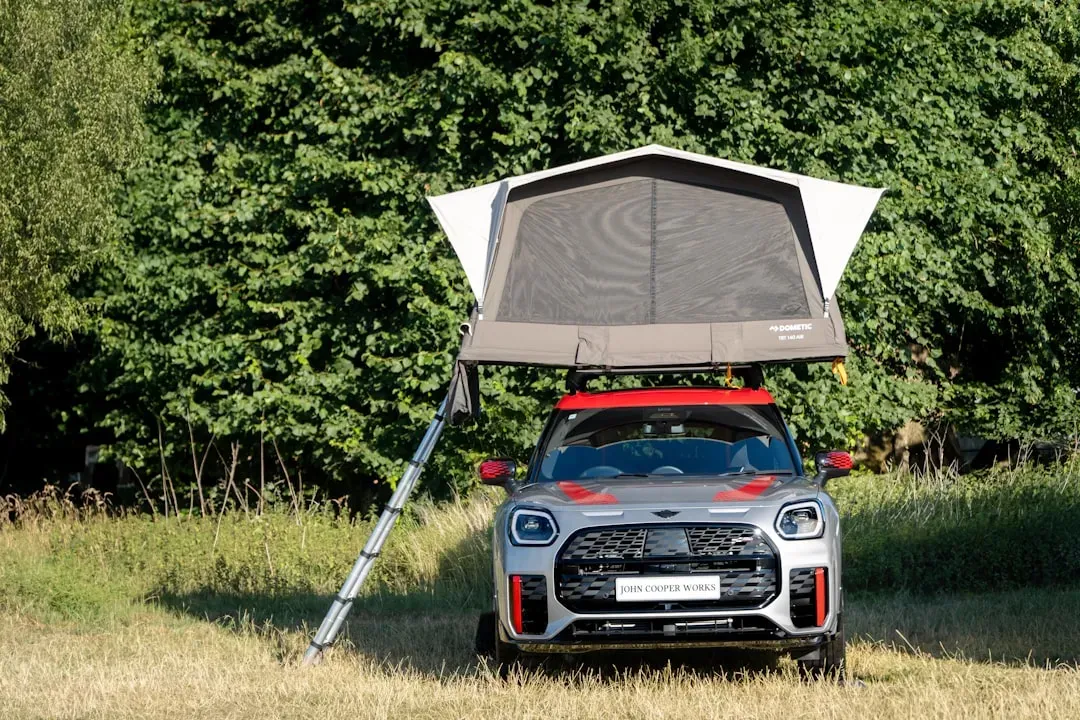
A portable canopy over your car on the driveway seems like a completely reasonable idea, especially in climates with harsh sun or heavy snow. It keeps your vehicle protected and costs a fraction of a proper garage.
Yet in many jurisdictions, these structures are outright banned. Portable canopies located in driveways, though widely popular, are not permitted in Contra Costa County.
The two fundamental reasons are wind loads and zoning requirements. Moderate winds have blown these structures down and into roadways, presenting unreasonable hazards.
To meet wind load resistance, they must be securely affixed to the ground, which makes them permanent structures by definition. Zoning requirements prohibit the first 20 feet of the front yard from having permanent structures installed, which prohibits the canopies.
It’s a classic regulatory catch-22 – make it secure enough to be safe and it becomes illegal as a permanent structure. Leave it unsecured and it’s a safety hazard.
7. Rental Dumpsters Left Without a Permit
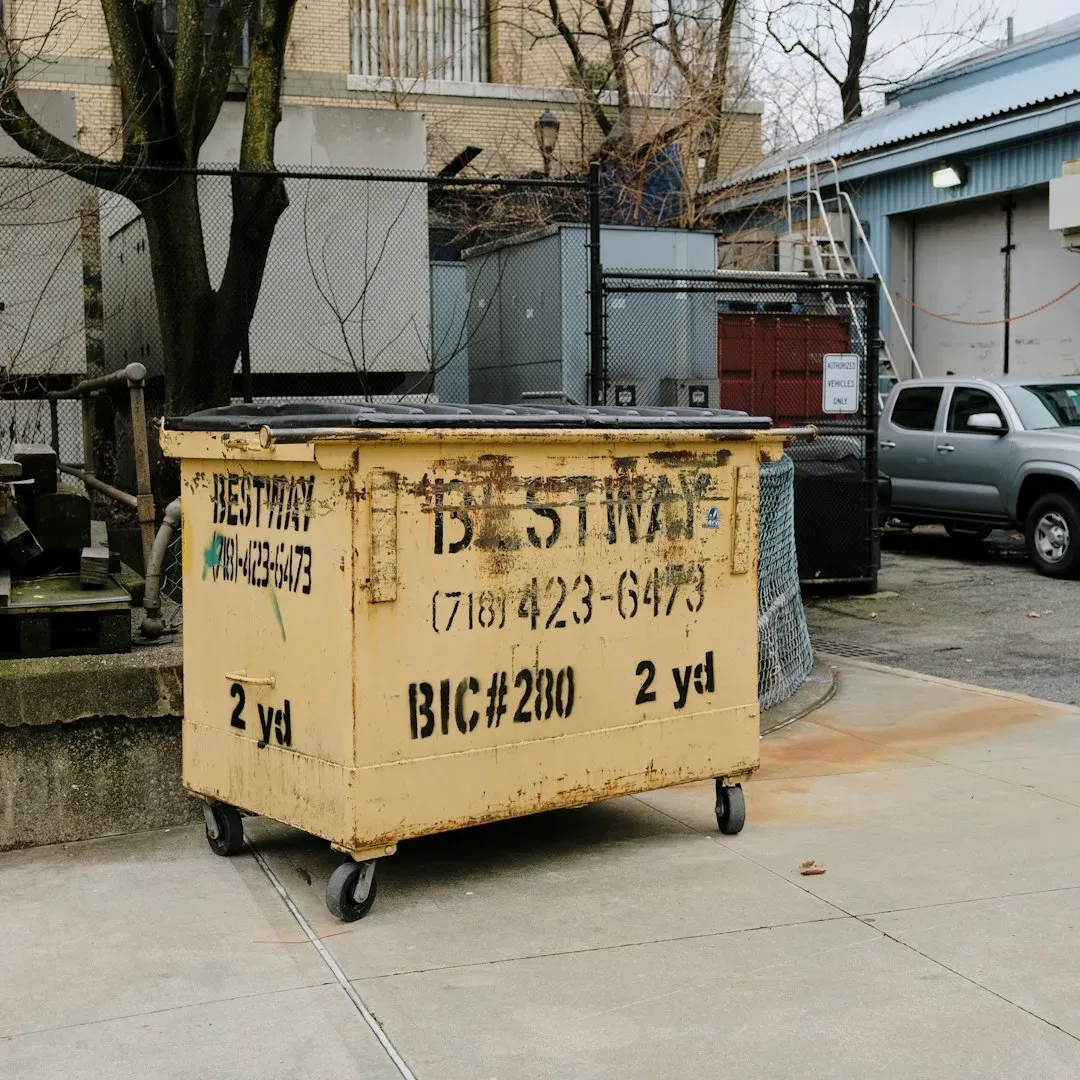
Doing a home renovation or clearing out years of accumulated stuff? A rental dumpster on the driveway seems like the obvious solution.
For the most part, placing one on your own private driveway is fine. The complications start when you need to place it on the street or when your local laws and HOA rules demand permits even for private placement.
Some cities require a permit for dumpsters on private property, including your driveway. In the Borough of Media, Pennsylvania, it is illegal for any person to place one or more dumpsters or portable storage containers on any street, public grounds, or private property without first having obtained a permit.
Fines can escalate quickly. Violation of this chapter is punishable by a fine not to exceed $1,000, and each day that a violation continues constitutes a separate violation.
Imagine racking up daily fines because you forgot to file paperwork before your renovation skip arrived. Local regulations vary on the maximum time you can keep a dumpster in your driveway, but many cities put the cap at 30 days per calendar year.
The typical dumpster rental period is seven to 10 days – well within most city limits. Still, always check with your municipality before booking.
8. Oversized Trailers Left Detached
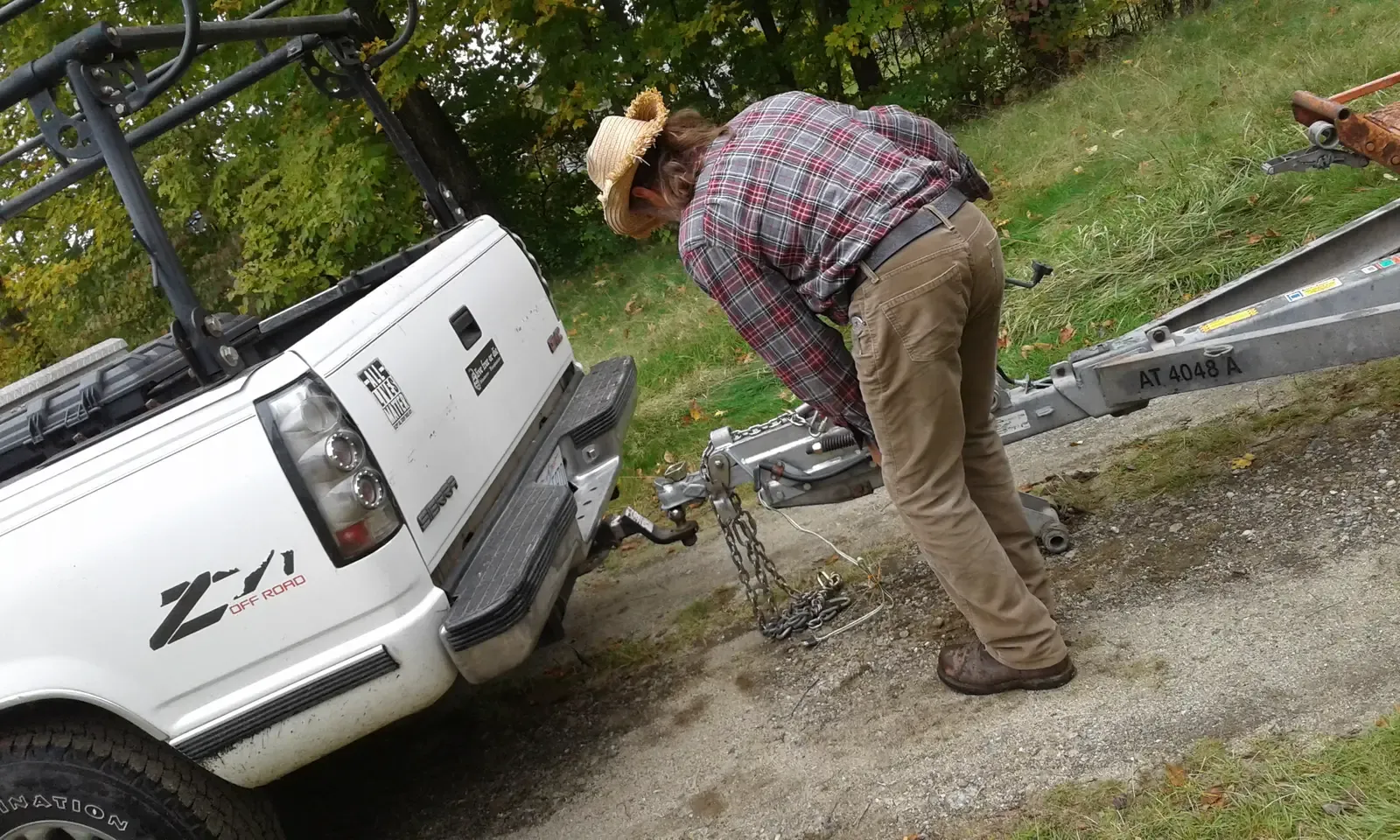
Detached trailers – utility, cargo, or otherwise – sitting on a residential driveway are a common source of code enforcement complaints. In Annapolis, Maryland, it is unlawful and a misdemeanor for the driver or owner of any trailer or trailer-type vehicle to cause the same to be parked, while attached to a motor vehicle, upon any public street, lane, or alley within the city for more than 48 consecutive hours and 10 days total within a calendar year.
It gets even stricter for detached trailers. If you have a trailer and hitch parked in the right-of-way, it must be attached to a vehicle.
A detached trailer just sitting there is often treated differently than one connected to a car or truck. Think of it less as parking and more as storage – and residential driveways generally aren’t zoned for storage of large equipment.
9. Vehicles Blocking the Sidewalk
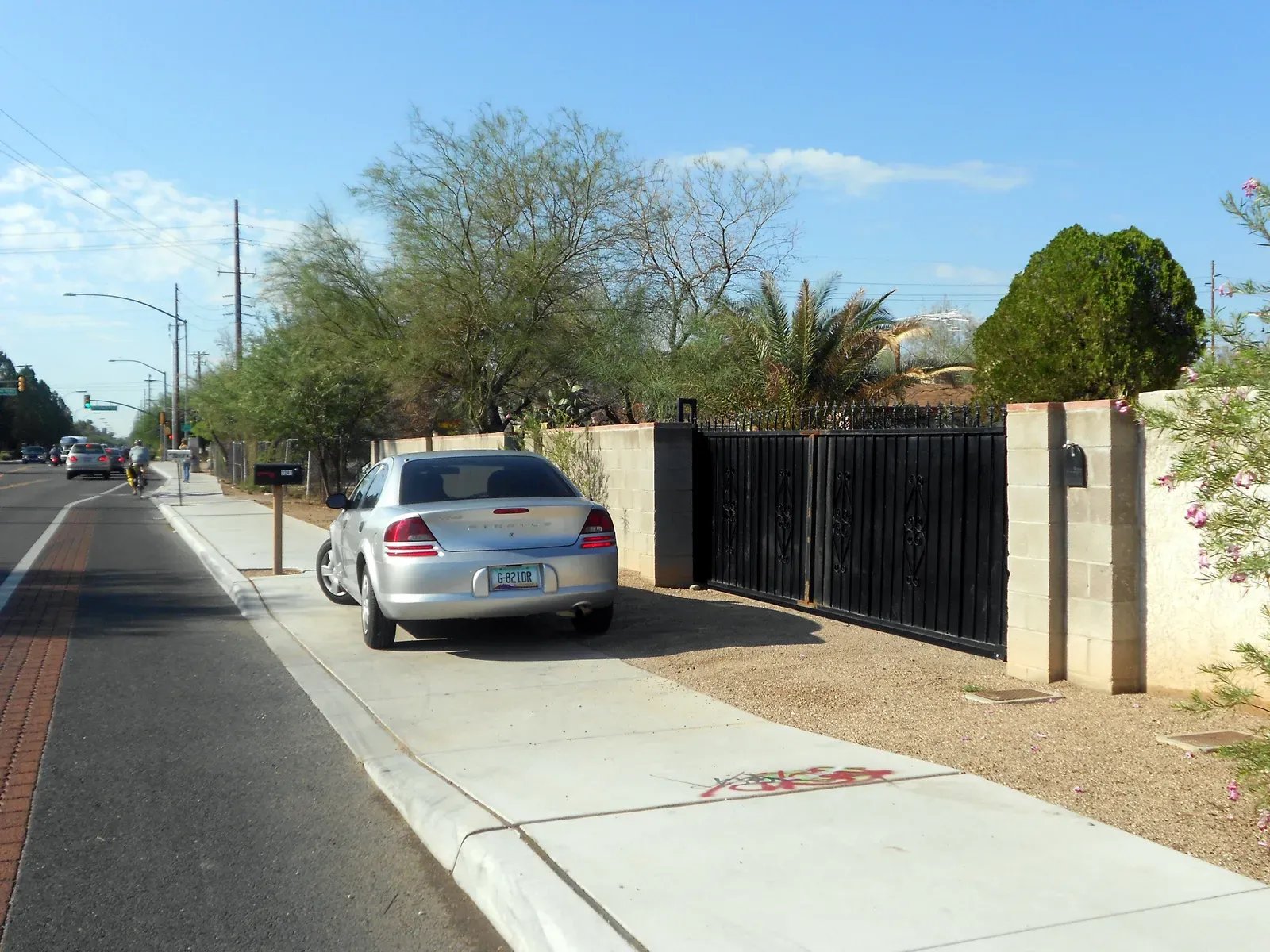
This is one of the most widely violated driveway rules in the country, and most people genuinely don’t realize it’s illegal. Parking a car so that it hangs over the sidewalk is extremely common in neighborhoods with short driveways.
It’s also illegal in most jurisdictions. It is a violation for any person to stop, stand, or park any motor vehicle so as to block any public or private driveway.
Pedestrians, including those using wheelchairs or pushing strollers, have a right to an unobstructed sidewalk. The purpose of driveway clearance laws is that the best interest, health, and welfare of residents be maintained for their free passage from and access to their residences and properties, as well as for the free and unrestricted access of emergency vehicles, including fire trucks, ambulances, and law enforcement vehicles.
Let’s be real – we’ve all seen it. Cars nose-in on the driveway with the front end jutting over the sidewalk.
It might save a few inches of garage space but it creates a real hazard, especially for children and people with mobility challenges. Most cities treat this as a ticketable offense, and some will tow without warning.
10. Portable Storage Containers Without Approval
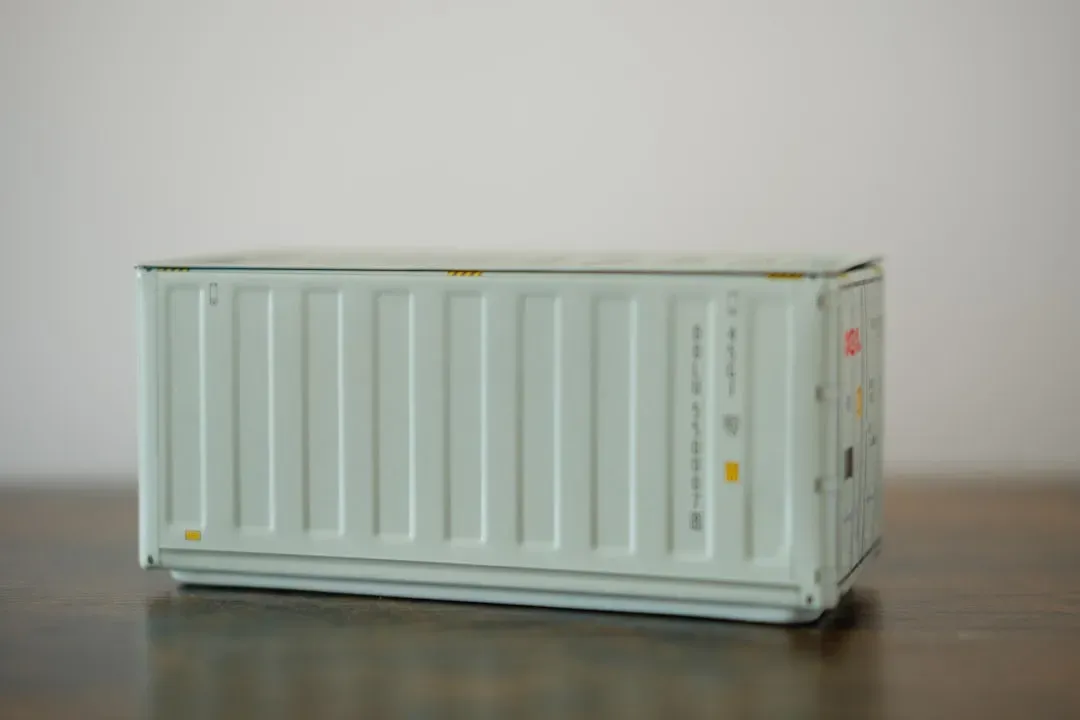
Those portable storage containers – the big metal ones dropped off by a truck – are incredibly useful during moves or renovations. However, their placement is heavily regulated in many cities, even when they go on your own driveway.
Within Seattle, portable containers for moving and storage and dumpsters placed in the public right-of-way require a Street Use permit before they are delivered and placed. Homeowners associations introduce another layer of regulation.
HOAs often have strict rules about dumpster and container placement, focusing on aesthetic standards and community safety. Before placing a container within an HOA-controlled area, checking with the association’s governing body is essential, as it prevents violations of community guidelines and maintains good relations within the neighborhood.
If placing your storage container on a driveway in a neighborhood, check with the local HOA for any restrictions and placement rules. This may include guidelines about how long you can keep the container on your driveway, required screening, or acceptable hours for delivery and pickup.
It’s not just about the container itself – even the time of delivery can be regulated.
11. Too Many Vehicles Parked at Once

Here’s one that surprises multi-driver households especially. You might think: it’s my driveway, I’ll park as many cars as it holds.
Many HOAs specifically cap the number of vehicles that may sit visible on a residential driveway at any given time. Many HOAs have rules limiting the number of vehicles you can have parked in your driveway.
If you have a multi-driver household, this can become a problem fast. Parking rules can be stricter on private streets, including those governed by a homeowners association.
In many HOA communities, the overflow from a driveway onto the grass or unpaved front yard is an automatic violation. Although it is illegal to park in an unpaved front yard, parking a boat on a Missouri driveway is permitted – which illustrates how specific and sometimes counterintuitive these rules can be.
The same principle often applies to regular passenger vehicles: the driveway itself may be fine, but the yard next to it is strictly off-limits.
12. Vehicles That Block Your Neighbor’s Driveway Access
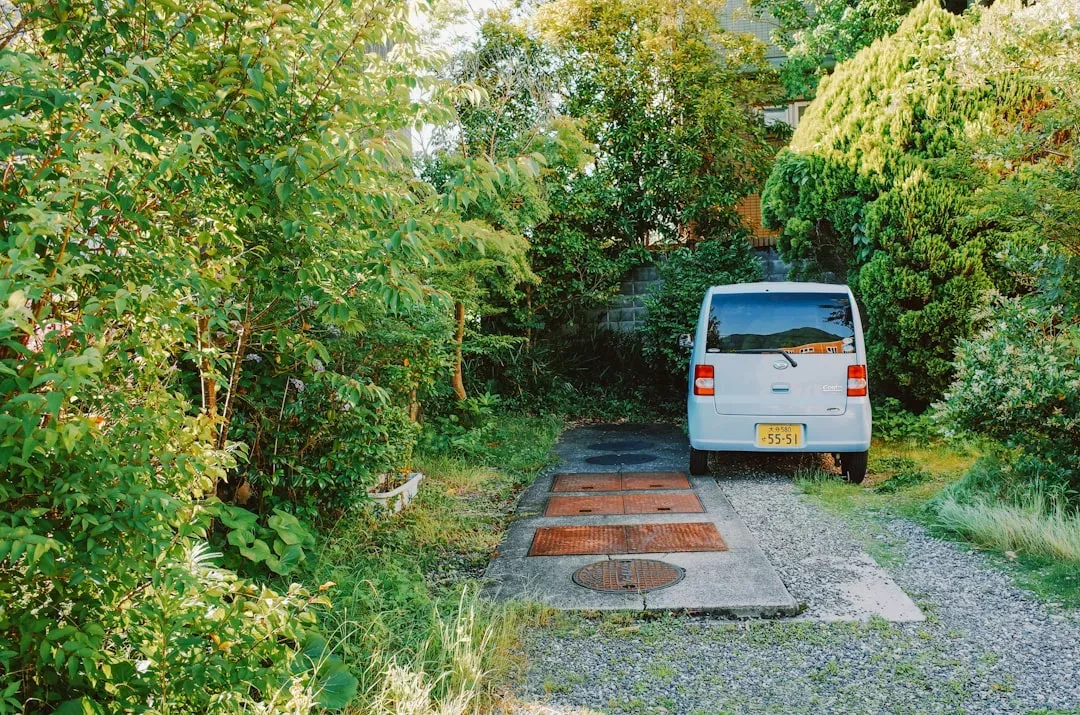
This last one isn’t about your own driveway per se – it’s about what you park near it. Blocking someone else’s driveway access, even partially, is illegal in virtually every jurisdiction in the United States.
It is illegal to block driveways, mailboxes, fire hydrants, crosswalks, stop signs, and intersections. Full stop, no exceptions.
No person shall park or leave stationary on a public highway any vehicle in front of or so as to obstruct or interfere with the ingress to or egress from any private driveway or alleyway, except with the permission of the owner of such private driveway or alleyway. Connecticut’s 2024 General Statutes make this crystal clear.
Blocking a private driveway can lead to numerous legal issues and disputes among neighbors. It’s important for everyone to understand the concept of private driveway laws to avoid unnecessary conflicts and maintain positive relationships within the community.
If there’s an unauthorized car parked on your driveway, it’s likely trespassing. In some situations, it may be practical to simply ask the person to move.
If they don’t, local law enforcement can get involved and towing may follow. The rules exist to protect access, safety, and the rights of property owners – and they’re taken seriously.
Want more stories like this? Follow us and never miss out!
